
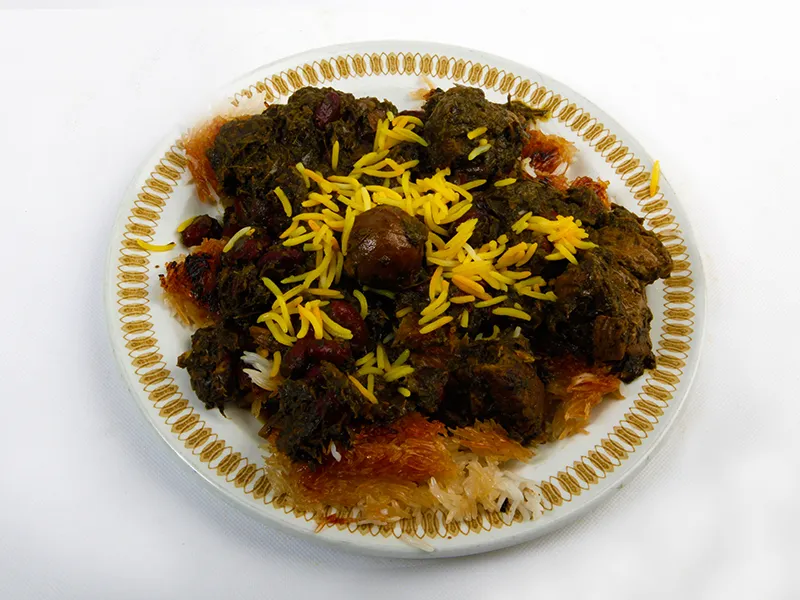
Put a pot of Persian rice on a table and watch what happens. Nobody reaches for the fluffy white middle. Everybody is waiting to see who gets the bottom, the sheet of rice that has sat against the pot and gone gold and crisp and slightly sweet. That is tahdig, which means simply the bottom of the pot, and it is the reason a lot of us learned to cook at all.
It starts long before the heat
Good tahdig is decided at the washing stage. The rice is rinsed in cool water five or six times, until the water runs clear rather than milky, then left to soak in salted water for a couple of hours. That takes off the loose starch, which is what makes rice sticky, and lets each grain take on water evenly so it swells long rather than fat.
Then it is parboiled, and this is the part people rush. The grains want to be soft on the outside and still firm in the middle when you bite one, which is usually five to seven minutes in a lot of fast boiling salted water. Drain it, rinse it briefly with cool water to stop it cooking, and let it drain properly.
Three ways we do it
Plain rice
Fat in the bottom of the pot, a mixture of rice, yoghurt and a little saffron water spread across it in a single layer, then the rest of the rice piled loosely on top in a mound so the steam can travel. This is the one with the deepest colour and the richest taste.
Potato
Rounds of potato, cut about the thickness of a coin, laid flat and edge to edge. Forgiving, and the one to make at home first, because potato tells you when it is ready by smell before it burns.
Flatbread
Sheets of lavash pressed into the buttered pot and up the sides a little. Lighter than the others and it shatters when you break it, which is exactly the point.
Then leave it alone
The rice is mounded, holes are made through it with the handle of a spoon so steam can rise, butter is dotted over, and the lid is wrapped in a cloth to catch the water that would otherwise drip back down. Then high heat for about ten minutes to set the bottom, and low heat for another forty five.
And now the hard part: do not lift the lid. Every look lets out the steam that is cooking the top of the rice, and drops the temperature that is browning the bottom. You will know it is going well because the kitchen smells of toasted bread and the pot starts to whisper rather than hiss.
You cannot hurry it and you cannot check it. You can only set it up properly and then trust it.
What goes wrong
- It sticks. Not enough fat, or the heat was too high at the start. The bottom needs to fry, not scorch.
- It is pale and soft. Too low, too short, or the lid was lifted. It wants a proper hour.
- It comes out in pieces. Usually fine. Run a knife round the edge, sit the base of the pot in cold water for thirty seconds, and it will let go.
Ask for it when you order. We will always find you a corner piece.
Come and eat
Read it, then taste it.
The grill is on from noon. Book ahead or walk in.